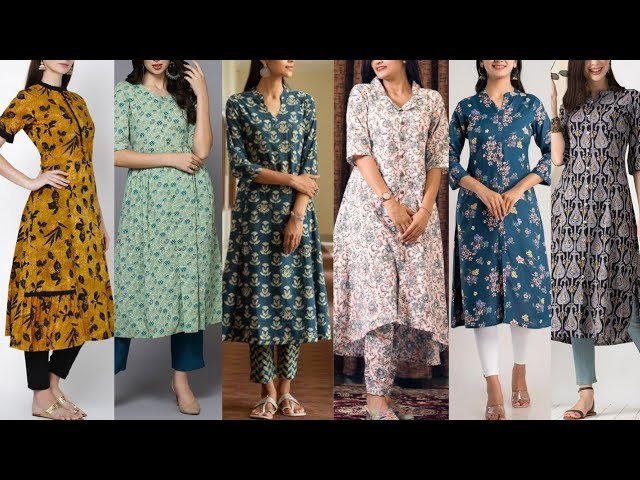
Let’s be honest — shopping for kurtis as a plus-size woman can feel like a guessing game. One brand’s 2XL fits like a glove while another brand’s 2XL barely gets past your shoulders. You return things, exchange things, and sometimes give up on an otherwise beautiful piece entirely. The root of that frustration is almost always the same: most size guides weren’t built with plus-size bodies in mind, and they certainly weren’t built with the real nuances of how curves are distributed.
This guide changes that. Here’s everything you need to know — every measurement that actually matters — so you can shop smarter and wear better.
First, Stop Relying on “Fits up to 42” Tags
Indian kurti labels are notorious for vague sizing. “Free size fits up to 44” tells you almost nothing if your hip measurement is 50 inches and your bust is 46. The number on the label refers to the bust measurement (in inches) at best, and sometimes it’s just aspirational. Always go by actual body measurements, not the number on the tag.
The Six Measurements That Actually Matter
- Bust Measurement: This is the starting point for any kurti selection. Wrap a measuring tape around the fullest part of your chest, keeping it parallel to the floor. Don’t suck in, don’t pull too tight — breathe normally. Add about 2 inches of ease to your actual bust measurement for a comfortable fit that doesn’t pull at the buttons or seams. If you’re between sizes, always go up.
- Waist Measurement For straight-cut or A-line kurtis, the waist measurement matters more than people think. Measure at your natural waist — that’s the narrowest point of your torso, usually about an inch above your navel. For women who carry more weight in their midsection, an A-line or empire-waist cut will be far more comfortable than a fitted silhouette, regardless of the number.
- Hip Measurement This is arguably the most critical measurement for plus-size kurti shopping. Measure around the widest point of your hips and buttocks — typically 7 to 9 inches below your natural waist. A kurti that’s too tight across the hips will restrict your movement, pull upward, and look nothing like it did on the product page. Always check that the kurti’s hip allowance gives you at least 2–4 inches of ease beyond your actual hip measurement.
- Shoulder Width Shoulder fit is where most ready-to-wear kurtis fall apart for plus-size bodies. Measure from the tip of one shoulder, across the back of your neck, to the tip of the other shoulder. If the shoulder seam sits too far in or droops off the edge, the entire silhouette looks wrong and uncomfortable. Many women with a larger bust find that the shoulder is the first thing that doesn’t fit in a size that otherwise works — in that case, tailoring the shoulder is relatively simple and worth doing.
- Sleeve Length Measure from your shoulder tip down to your wrist bone with your arm slightly bent. Sleeve length affects how polished or off the kurti looks. For 3/4 sleeves — a very popular style — the tape should fall to about 3–4 inches above your wrist. For full sleeves, measure all the way to the wrist bone. If a brand runs short in the sleeve, a tailor can extend with matching fabric.
- Kurti Length This is one of the most underrated measurements. Measure from the base of your neck (the nape) straight down your back to where you want the hemline to fall. Kurti length dramatically affects how tall or proportionate you look. Knee-length kurtis (38–42 inches) are the universally flattering sweet spot for most plus-size women. Midi-length and Anarkali styles (44–54 inches) can look incredibly elegant but work best when paired with the right bottoms.
How Your Body Shape Affects Fit
Not all plus-size bodies are shaped the same, and a single size chart can’t account for that. Here’s what to keep in mind:
If you are apple-shaped (you carry more weight around your middle), look for empire-waist kurtis, A-line cuts, or designs with vertical embroidery that draw the eye up and down rather than across. Avoid belted styles or anything with a defined waist seam that sits at your natural waist.
If you are pear-shaped (your hips are wider than your bust), go up a size for the hip allowance and have the bust taken in. Flared or Anarkali-style kurtis are your best friend because they flow freely from the bust downward.
If you are hourglass-shaped, you have the most flexibility in kurti styles, but watch out for straight-cut kurtis that add bulk everywhere — a slightly fitted A-line will celebrate your shape far better.
A Note on Fabric
Fabric choice matters as much as size. Rayon and georgette drapes beautifully on curves and doesn’t cling. Pure cotton breathes well in Indian summers. Avoid heavy brocade or stiff cotton blends in very form-fitting cuts — they don’t give, and any tightness will be amplified. Chanderi and linen offer a lovely middle ground: structured enough to look polished, but forgiving enough to feel comfortable.
How to Measure Yourself at Home
Use a soft fabric measuring tape. Measure over your usual innerwear or a thin cotton top — not over a thick jacket or a padded bra unless that’s what you wear daily. Stand straight, breathe normally, and if possible, have someone else take the measurement. Self-measuring introduces error, especially at the bust and hips, where the tape can angle unevenly.
Write down all six measurements before you shop, and compare them side by side with the brand’s size chart — not just the size label. When two numbers fall in different size ranges, always size up on the larger measurement.
The right kurti doesn’t just cover your body — it complements it. Once you know your numbers, shopping becomes a completely different experience.
Kurtis That Gently & Gracefully Camouflages Tummy Area — Not as a Fix, But as a Thoughtful Choice
Author: Minakshi Maurya