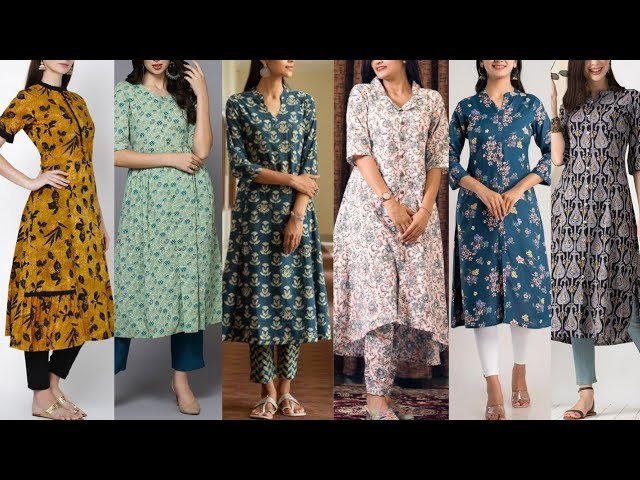
Not just “human,” but heart-first. Like we’re sitting across from each other at a sunlit café table, chai cooling slightly, voices low and real—no filters, no pretence, just two women who’ve spent years figuring out what it means to wear clothes that fit, not just in size, but in spirit.
Let’s talk about being tall — not as a fashion “challenge,” but as a quiet kind of aliveness.
You know how it is:
You don’t announce your height. You are just it. In that way, your arms swing a little farther when you walk. In how you catch your reflection in shop windows—taller than most, shoulders relaxed, and posture unforced. In how you sometimes have to duck just a little under doorframes—not awkwardly, but familiarly, like greeting an old friend.
Being tall isn’t loud. It’s spacious. Its presence without permission.
And yet, so many kurtis feel like they were designed for someone else’s body: someone shorter, maybe narrower at the shoulder, with a different rhythm between hip and knee. So when you stand in front of the mirror, trying on something labelled “long” or “flattering,” and it lands just wrong — too tight here, too short there, bunching there — it’s not your body that’s the problem. It’s the silence between what the garment promises… and what it actually does.
So let’s not talk about “which style suits tall girls.” Let’s talk about which one makes you forget you’re wearing clothes at all.
Straight-fit kurtis—like slipping into your own skin
A good straight-fit kurti doesn’t hug. It doesn’t hide. It doesn’t try to reshape you.
It just… holds you.
Think of the last time you wore something that felt this easy: sleeves that fall exactly where your elbow bends—not grazing your wrist, not stopping mid-forearm. A hem that lands where you want it—grazing your kneecap, skimming your calf, or brushing your ankle—not riding up when you sit and not dragging when you walk. Shoulders that lie flat, not pull, not gap.
That’s the magic of a well-cut straight fit—especially for tall frames. It works with your length instead of fighting it. No visual “cut-offs.” No awkward pooling. Just clean, quiet lines—like your silhouette finally got a deep breath.
And here’s the tender part: For many tall women, straight fits feel like permission to be seen as you are, without flourish or fanfare. To move through a meeting, carry groceries, chase after kids (or dogs!), or just fold yourself onto the sofa—never once think, “Is this riding up? Is this tight? Do I look ‘too much’?”
It’s not about looking “slim” or “sleek.” It’s about feeling anchored. Grounded. Like your clothes aren’t asking anything of you — except to be worn.
But—and this matters—not every straight kurti feels like this. Some are stiff. Some hang like sacks. Some pinch at the waist and ignore your hips entirely. What works is the one that listens: slightly shaped through the bust, gently tapered below the hip, and cut long enough—not just “long” on paper, but in reality, on your frame.
You’ll know it when you put it on and think, “Oh. This gets me.”
Flared kurtis—like laughter in fabric form
Now-flared kurtis.
Not the ones that billow like sails (unless that’s your joy, and if it is, wear them proudly!). But the soft flares—the ones that begin their gentle widening just below your natural waist or hip, skimming your thighs and flowing out like a sigh released.
For some tall women, this is pure delight.
Because height brings verticality—and flair brings rhythm. It’s movement. Its softness. It’s the gentle curve that balances your strong shoulders, your steady stance, and your grounded energy.
Imagine walking into a room — not to announce yourself, but to arrive. Your step is calm. Your posture is effortless. And your kurti? It moves with you—not behind, not around—but alongside, like breath made visible.
That’s the quiet power of a thoughtful flare. It doesn’t shorten you—it complements you. It doesn’t hide your height — it dances with it.
And yes—it can feel joyful. Like wearing a secret
Kurtis for Petite Women: Why Fit is not Just About Size — it is About Line, Length, and Lightness
Author: Minakshi Maurya