There’s something quietly satisfying about opening a package and finding everything you need — not just a kurti, but its perfect counterpart: a dupatta that falls like liquid silk, bottoms that drape without dragging, maybe even a lightweight jacket or stole tucked in beside them. Kurti combo packs — those thoughtfully curated sets available online — are more than a shopping shortcut. They’re the result of someone (a designer, a stylist, a weaver) asking: What does this kurti truly want to wear? And then answering — with intention.
Let’s begin where all good combos start: the kurti itself—and the story it tells.
You’ll find combos built around solid-coloured kurtis, often in breathable cotton-viscose or soft mulmul — minimalist by design, but rich in texture. These aren’t “basic” — they’re blank canvases with purpose: a charcoal grey kurti with a subtle slub weave; an oat-milk white with hand-finished hems; a deep rust with tone-on-tone pintucks across the yoke. Their power lies in versatility — they pair effortlessly with printed dupattas, embroidered churidars, or even solid palazzos in contrasting yet complementary shades.
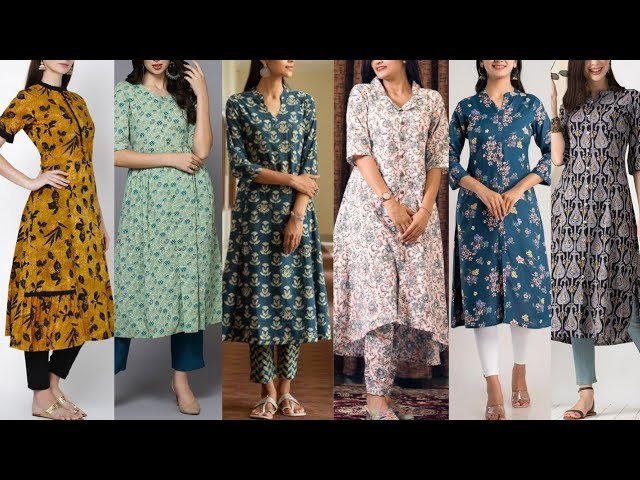
Then there are printed kurti combos, where the pattern is the heartbeat. You’ll see small-scale jaal prints — delicate, repetitive motifs (like tiny florals or geometric dots) scattered evenly across the fabric, never crowding the chest or hip. These work beautifully for everyday wear because the scale keeps things light — no visual weight, no overwhelming contrast. Next, medium-scale block prints: bolder, hand-carved motifs (peacocks, mangoes, temple borders) placed symmetrically — often concentrated along the hem, neckline, and side seams — so the print feels anchored, not chaotic. And yes, you’ll also find large-scale digital prints, especially in festive combos — think watercolour florals or abstract brushstrokes — but the smart ones balance them with solid-coloured dupattas or tonal churidar panels, so the eye has breathing room.
Fabric is where combos reveal their integrity.
The best sets don’t mix textures arbitrarily — they harmonise. A cotton-kurti combo will include cotton or cotton-blend dupattas (not polyester chiffon that slips and slides). A rayon-viscose kurti will come with a matching viscose dupatta — same drape, same sheen, same breathability. Even in blended combos — say, a linen-cotton kurti — the dupatta is usually a fine linen-viscose gauze or mulmul, chosen not just for look, but for how it moves with the kurti: soft, fluid, never stiff or static.
Now, the dupatta — not an afterthought, but the soul of the set.
Length matters: most quality combos offer dupattas between 2.25–2.4 meters — long enough to drape gracefully over one shoulder or wrap lightly, but not so long it tangles while walking. Edges are finished thoughtfully: double-fold hems (not raw or serged), sometimes with a delicate 0.5-inch contrast piping or hand-embroidered scallop — always aligned, never skewed. And colour? It’s rarely identical — instead, it’s curated. A navy kurti might come with a dupatta in indigo-dyed mulmul with subtle cloud-like mica highlights; a mustard kurti paired with a dupatta in warm ochre with hand-blocked vine motifs along the border. This isn’t duplication — it’s dialogue.
Bottoms complete the rhythm — and here’s where combos get truly thoughtful.
You’ll find churidar combos, where the leggings are cut from the same fabric or a matching blend — same GSM, same stretch, same finish — so they move as one with the kurti, not against it. The ankle cuff is clean, the waistband soft and wide (no digging), and the fit is gently tapered — never overly tight at the calf, never baggy at the thigh. Then there are palazzo combos: wide-legged, high-waisted, and cut from breathable crepe, rayon, or cotton-linen — designed to flow with the kurti’s length, not fight it. Look for palazzos with a gentle front pleat or soft gathers at the waistband — they add volume up top, balancing longer kurtis without heaviness.
A-line kurtis for pear-shaped body guide: Grace in Motion, Confidence in Cut
Author: Minakshi Maurya