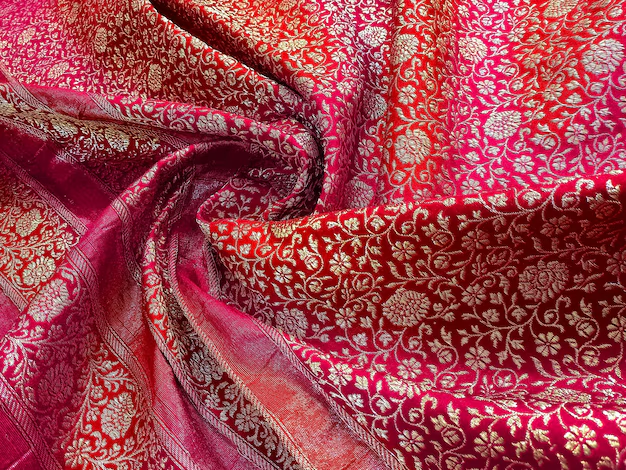
Silk sarees, especially handloom and pure silk pieces, deserve gentle, regular care. Left tucked away for years they can develop odd smells, cracked folds and even white fungus from trapped moisture. With a few simple habits and inexpensive supplies, you can preserve the colour, sheen and drape of your favourite sarees for decades.
Why silk sarees need special care
Silk is a natural fibre that is breathable and sensitive to moisture, heat and chemicals. Common problems that arise from improper storage include:
- Musty odour caused by moisture trapped in folds
- White fungus or mildew when humidity is present for long periods
- Cracked folds when sarees stay folded in the same direction for years
- Colour fading or patches from direct contact with strong chemicals or rough surfaces
Sarees want to breathe.
Ten-minute routine to store a silk saree properly
You do not need fancy equipment. Spend about 10 minutes per saree to follow this routine and you will avoid most storage problems.
- Clean and fully dry the saree before storing. Any residual dampness invites mildew.
- Fold the saree neatly. For precious pieces fold the pallu and border inside so these areas do not rub.
- Wrap the saree in a cotton cover or an old soft cotton cloth. Use one saree per wrap, or two to three light sarees together.
- Place a small silica gel packet or a wrapped naphthalene ball in the cupboard but never let it touch the silk directly.
- Stack the wrapped sarees on a flat shelf with some breathing space. Avoid cramming tightly into plastic containers.
What to use and what to avoid
Use cotton for wrapping
Natural cotton lets fabric breathe and acts as a gentle barrier. Ready-made cotton saree bags are handy, but an old soft cotton cloth works just as well. Wrap sarees loosely so they have a little room to move.
Avoid hard, airtight plastic
Hardened plastic boxes seal out air and trap moisture. If you must use plastic organisers choose deep ones, and store only two or three sarees in a single large container to allow airflow.
Moisture control: silica gel and naphthalene
Small silica gel packets are safe, do not stain and absorb moisture efficiently. Naphthalene balls work too but should never touch the silk. Wrap them in a handkerchief and place them in a corner of the cupboard.
Natural fresheners
Dry neem leaves are a wonderful natural option. When completely dry they give a mild fresh scent, keep insects away and will not stain silk. Place a small bundle between saree stacks.
Hangers and folding: do it the right way
Hanging sarees can be convenient but must be done carefully.
- Do not use steel hangers; rust can transfer to the silk and ruin it.
- If hanging is necessary prefer plastic hangers or wooden hangers with a plastic-coated rod.
- To prevent permanent creases, periodically open up the saree and refold it in the opposite direction. This prevents wear along the same fold lines.
Maintenance schedule
Regular attention keeps silk sarees in prime condition:
- Every 4 to 5 months remove expensive silk sarees from the wardrobe and air them. Open at least a few folds and let them breathe under a fan or in mild sunlight for a short while.
- Avoid harsh direct sunlight which can fade colours. Mild sun for a brief period helps reduce moisture.
- Check for any signs of dampness, odour or tiny spots of fungus and treat promptly.
Quick tips summary
- Wrap in cotton not plastic directly.
- Use silica gel packets or wrapped naphthalene balls away from fabric.
- Dry neem leaves for a natural fresh scent and insect deterrent.
- Rotate folds periodically to avoid cracking at the creases.
- Do not let silk sit damp and air items every few months.
With these simple practices you can keep silk sarees soft, fragrant and ready to wear for years. A little attention now saves heartbreak later when that heirloom saree still looks flawless after decades.